A pair reads when the two pictures share one trait and differ in everything else. Make the background, the colour or the direction of the gaze the shared thing — one of them — and leave the rest apart. Devices built on the edges of the frame break, because a circular crop removes roughly 21% of a square's area and every bit of it is corner. Which gives the one hard rule here: splitting a single image in half across two profiles is a waste of time.
Building a pair is easier from a set that already matches: everything in the avatar gallery shares a style, so any two of them are half a pair already.
On this page

Short answer
- One shared trait, two different subjects. Match everything and you have a duplicate, not a pair.
- A shared background works best, because it still registers at a forty-pixel preview.
- Mirrored poses work only when the subjects sit toward the centre rather than the edges.
- One shared colour is the most durable device: colour survives where subject matter no longer does.
- Do not cut one image in half. The seam is never shown, and the circle eats the edges along the cut.
Three devices that actually work
A shared background
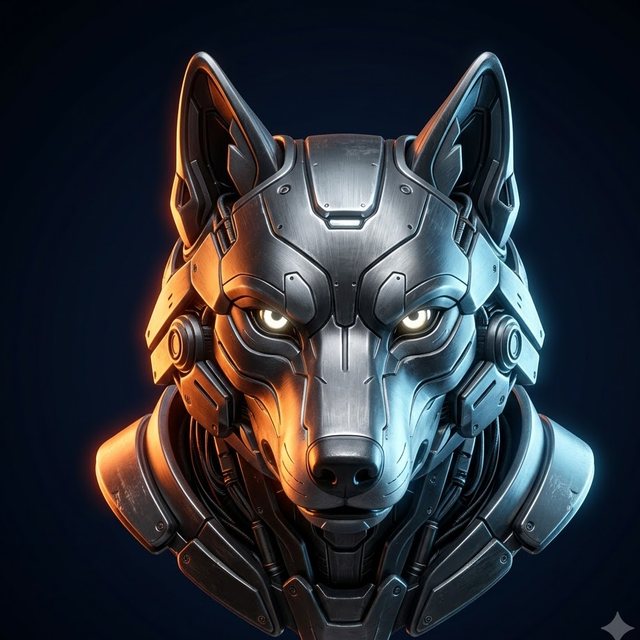
Same background, different figures. Two different animals on the same dark backdrop with the same lighting read as a pair instantly, because the eye catches the match before it parses the subject.
The device wins at small sizes: the background occupies most of the square and the figure occupies less, so a forty-pixel preview is mostly background.
Where it misses: too plain a background and the pair turns into two coloured squares. It needs to be recognisable — a gradient, haze or grid, not a flat fill.
Mirrored poses
Two figures turned toward each other. The classic, and the one that breaks most often, always for the same reason.
Done right: turn the figures inward but push them toward the centre of the frame, not the edge. The circular crop then leaves the turn intact and takes only the margin.
Where it misses: turning them and shoving them against the border. A profile hugging the frame is the first thing the circle removes, and instead of a pair you get two cropped shoulders.
One shared colour
The quietest device and the most durable. The subjects can be anything as long as both pictures carry the same accent colour — cold blue light on dark, for example.
It is also the only one that survives crossing platforms. Steam shows a square avatar, everyone else shows a circle; the background crops differently and so does the pose, but the colour is identical everywhere.
Where it misses: too common a colour and the match never registers. Red and blue turn up in half the chat; ochre and teal turn up almost nowhere.
Why the circle crop breaks a pair
Because almost every pairing device is built on the edges of the frame, and the edge is exactly what a circle removes.
A circle inscribed in a square keeps about 79% of the area. The missing fifth is not an even border but four corners, and into those corners goes everything you pushed outward for the sake of "looking at each other".
Of the six platforms broken down in the avatar size guide, only Steam displays a square. Discord, Twitch, Xbox and Telegram all display circles, and on Xbox the crop is documented outright: the mobile app asks you to pinch and drag inside a circle to fit the photo.
One practical rule follows. Judge a pair in circles, not squares — set both pictures and look at them in a shared chat, where they actually sit near each other.
Building a pair out of our avatars
The gallery pictures share a style already: the same dark background, the same lighting scheme. That means the third device — one shared colour — is done for you, and only the subjects are left to choose.
Combinations that pair themselves:
- Wolf and cat — a contrast of temperaments under identical light: the serious one and the one who is not.
- Knight and samurai — one role, two traditions. Reads as a duo rather than two strangers.
- Dragon and skull — one theme, two scales.
- Astronaut and ghost — both faceless, both about emptiness. The quietest of the pairs.
What does not pair: two pictures from the same theme with similar silhouettes. Two animals with the same head angle look, at preview size, like one avatar duplicated.
If you are building a pair from your own pictures, match them fully on a single parameter. The background is the easiest: an identical background forgives differences between the figures, while identical figures never forgive a different background.
There is also a device for people whose pictures refuse to match at all. Move the match off the picture and onto the label: a shared prefix or suffix in the two usernames ties you together as firmly as a shared background, and it keeps working in places where avatars are shown one at a time.
Two names off one root come out of the clan name generator quickly enough, and the per-platform character limits sit in our open dataset of nickname rules — on Steam the cap is 32 bytes rather than 32 characters, so Cyrillic and CJK names run out of room twice as fast.
Three people or more: what changes
The more people involved, the simpler the shared trait has to be.
Two people can afford a mirrored pose and a shared background at once. At five, complex devices stop working and you keep exactly one — colour or background, pick one. Every other match is invisible at preview size.
For a roster it is also a matter of order. Five people in one visual style look like a team on a tournament bracket, and it shows even in the bracket generator, where the names stack in a column. A name to go with that roster comes from the clan name generator or the team name generator, and the logistics of running the event are in how to run a tournament.
Where matching avatars will not work
Some places give the device nothing back, and it helps to know them in advance.
An alphabetically sorted friend list. Your two pictures land at opposite ends. A pair built for adjacency is never adjacent there.
Search results and profile pages. Avatars are shown one at a time. Anything relying on the other half is lost.
Steam against everyone else. Steam's avatar is square, Discord's and Telegram's are circles. A pair composed for a square, using its corners, collapses on the circular platforms.
Tiny previews in overlays and notifications. All that survives there is a silhouette and one colour. Pose-based devices die; the colour device lives.
What usually goes wrong
You split one image in half. Symptom: it works when placed side by side and means nothing separately. Cause: no interface shows two avatars edge to edge, and the circle trims the very edges along the cut. Fix: make two self-contained pictures with one shared trait.
Everything matches. Symptom: people mix the two of you up. Cause: same background plus same silhouette plus same colour. Fix: keep exactly one of the three shared.
The pair was chosen on a big screen. Symptom: perfect at 640×640, two identical blobs in chat. Cause: at forty pixels only silhouette and colour differ, detail does not. Fix: shrink both and compare them small.
One of you set it, the other forgot. Symptom: the pair lasts a week. Cause: the two avatars were not changed at the same time. Fix: do it together in one sitting — the per-platform routine is in how to change your avatar everywhere.
You grabbed a matching set from image search. Symptom: the same two pictures belong to a dozen other pairs in the same chat. Cause: popular matching sets spread wider than single ones. Fix: assemble the pair yourself from a set that is not sitting at the top of the results.
A shared background is worth finishing on the desktop too: the same wallpaper on both machines is the same device at a larger scale, and the files for it are in the wallpaper gallery. Choosing a style before choosing a pair is covered in avatar ideas by vibe.
FAQ
What makes two avatars read as a pair?
One shared trait and two different subjects. Share the background, the colour or the pose — one of them. If everything matches you get two identical pictures, and a pair stops reading as a pair.
Can I split one picture across two avatars?
Technically yes, and it will not work. The seam only exists when the two sit edge to edge, and no interface ever places them that way — there is always somebody between you in a member list. The circular crop then eats exactly the edges along the cut.
Why does a pair fall apart after uploading?
Usually the circle. Devices like "he looks right, she looks left" live on the edges of the frame, and a circle removes roughly 21% of a square's area, all of it corners. Move the subjects toward the centre.
Are matching avatars only for couples?
No. The same device works for a duo in a shooter, for two channel hosts and for a five-person roster. Only the count changes: the more people involved, the simpler the shared trait has to be.
Where do matching avatars look worst?
Anywhere you are never shown side by side — an alphabetically sorted Steam friend list, or search results. The device is built for a busy chat and a server member list, where you actually stand close together.