The first episode was free because it was a distribution channel, not a gift. In the nineties you could not put a game on a storefront with one click: it travelled on floppies, came off bulletin boards and rode along on magazine cover disks. Shareware turned copying into logistics — copy as much as you like, then pay by mail for the rest.
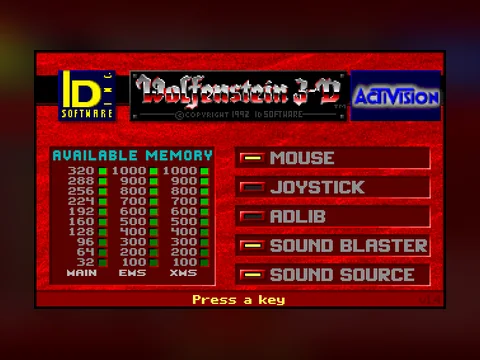
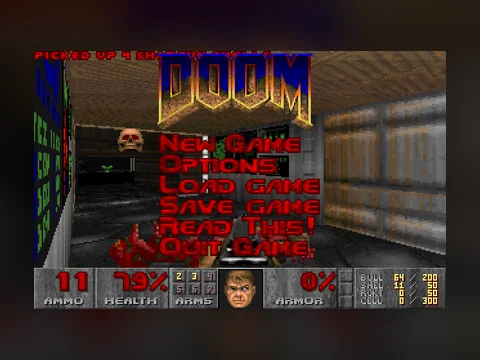
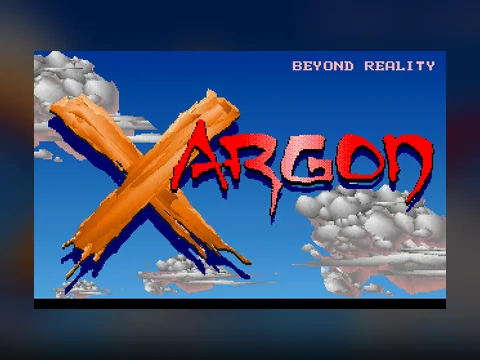
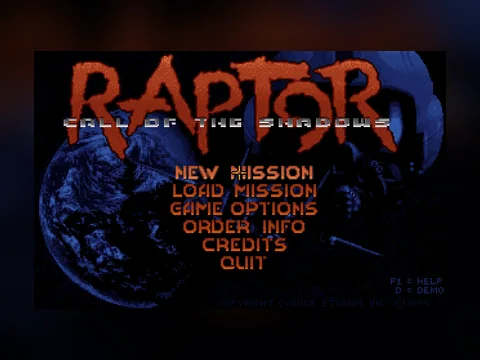
Everything in our retro section grew out of that arrangement: the first episodes of Doom, Wolfenstein 3D, Xargon and dozens of others still circulate under the rules their publishers wrote.
On this page
Short answer
- Bob Wallace attached the word "shareware" to his PC-Write editor; before that Andrew Fluegelman called his program freeware and Jim Knopf called his "user-supported software".
- The name stuck after a 1984 naming contest run by Softalk-PC columnist Nelson Ford.
- Apogee invented cutting a game into episodes and giving away only the first. It started with the Kroz series, and Wolfenstein 3D and Doom followed the same shape.
- The permission to copy sits inside the game archive, in a file called
vendor.docor its equivalent, and it still holds. - That permission covers the free episode only, and only as unmodified files. Registered versions are excluded by name.
Who thought of giving software away?
Three people, almost at once and independently. In 1982 Andrew Fluegelman released the communications program PC-Talk and called it freeware, describing the idea as "an experiment in economics more than altruism". Around the same time Jim Knopf handed out his PC-File database as "user-supported software". Bob Wallace shipped the PC-Write word processor and used the word shareware.
It worked better than it sounds. By 1984 Knopf was taking in roughly a thousand dollars a day, and Fluegelman was receiving dozens of $35 cheques daily.
The name was settled by vote: in 1984 Softalk-PC columnist Nelson Ford ran a contest and "shareware" won. By 1988 PC-Write had more than 27,000 registered users paying about $1.5 million a year.
The idea underneath all three cases is identical. The program spreads on its own, copying is not the enemy, and money comes from the people who liked it enough to pay voluntarily.
How Apogee turned that into an episode business
Games handled voluntary payment badly: play, delete, never pay. Apogee found the fix everyone else then copied — split the game into three episodes and give away only the first.
The scheme is strict and fair at once. Episode one is a complete game with its own ending, and you may copy it and pass it on. After that the screen tells you the sequel exists, and here is the address, the phone number and the price.
It started with the Kroz series, the text adventure Apogee grew out of — the order form still describes it that way. Wolfenstein 3D and Doom followed, and Epic MegaGames and id Software turned the model into an industry standard.
Numbers from the order form inside the Wolfenstein 3D shareware archive: the six-episode Wolf-Pack cost $49.95, the hint book with maps and secrets $10, and Kroz itself $24.95.

What was actually in the free archive
Not a taster, but a working game plus a folder of paperwork. The Wolfenstein 3D shareware archive that runs in our section holds, next to the executable and the data files: vendor.doc, the distribution licence; order.frm, the order form with prices and phone numbers; file_id.diz, the short description bulletin boards displayed in their catalogues; a help program and a long FAQ.
The Doom archive carries the same kit plus utilities for network and modem play, and a README in which id Software asks people not to build new levels for the shareware release — custom levels were treated as a reason to buy the registered version.
One more detail of the period sits in that README: the emblem of the Association of Shareware Professionals. The association ran an ombudsman you could complain to when an author behaved badly.
Is it legal to run this today?
Yes, and the grounds are inside the archive. The vendor.doc from Wolfenstein 3D opens by stating that by copying, using or distributing the program you agree to its terms. Then come the terms, and the first of them has no hedging: everyone can copy, upload and pass the program around, and is encouraged to, as long as nobody charges for it.
The conditions are real rather than decorative. The ones that concern us:
- Every file, unmodified. The licence lists them by name and byte size. The set cannot be trimmed.
- The free episode only. The document says the program is marked shareware and contains episode #1, and grants no right to any other version.
- Copyright notices stay. Trademarks and copyright lines are not to be removed.
- No modified builds. Custom levels, altered characters and third-party tools for editing the game are excluded.
- Retail racks, CD-ROMs and hardware bundles need prior written permission. Catalogues, bulletin boards and online services do not.
Part of the catalogue later went further than shareware, with rights holders releasing whole games: Tyrian in 2004, Bio Menace and Stargunner among them. There the "episode one only" limit no longer applies.

What shareware is not
It is not a demo. Demos exist for advertising and are usually crippled: two levels, half the arsenal, saving disabled. A shareware episode stands on its own and has an ending.
It is not an open licence. Copying is allowed, changing is not. Doom shows the difference cleanly: the shareware game travels under its own distribution terms, while id Software opened the engine source separately and later, under the GPL in 1999. Two permissions, two different things.
It is not abandonware. That word has no legal meaning; it describes games nobody is currently enforcing rights over. An absent complaint is not a permission. Shareware is different precisely because the permission was written by the author and shipped with the files.
It is not a free full version. Registered episodes were sold then and parts of the Apogee and id catalogues are sold now on digital storefronts. You will not find "full version free" links here, and they are not worth hunting for.
What usually goes wrong
Hunting for a "full version" instead of playing the episode. Symptom: the game ends on an order screen and feels truncated. Cause: one episode was the whole offer. Fix: treat it as the format; sequels live in the rights holder's store, not in a download search.
Assuming thirty years means the rights expired. Symptom: "it is ancient, anything goes". Cause: copyright terms run for decades and thirty years does not exhaust them. Fix: look at the licence in the archive rather than at the calendar.
Confusing shareware with modding. Symptom: trying to load custom levels onto the shareware build. Cause: both id and Apogee asked people not to do that specifically with the free episodes. Fix: mod the registered version bought from the rights holder.
Thinking free means rule-free. Symptom: repacked archives with the documents stripped out and a rewritten description. Cause: the licence demands the complete, unmodified set. Fix: pass the archive on whole, licence and order form included.
Expecting shareware to remember your progress. Symptom: an episode finished, the page reloaded, everything gone. Cause: that is the emulator rather than the licence — its file system lives in the tab's memory. Fix: read how these games run in a browser and play an episode in one sitting.
Where to see it working
The quickest way to see the model from inside is to open Wolfenstein 3D or Doom and reach the end of episode one, where the game itself explains that the sequel is for sale and quotes the price of the day. Doom's first episode is broken down level by level here, and Xargon next door shows the same arrangement at another publisher. Which of these are worth playing rather than examining is sorted by genre in the best old DOS games.
FAQ
How is shareware different from a demo?
A demo is advertising and is usually cut down: two levels, half the weapons, saving switched off. A shareware episode is a finished part of the game that you are allowed to copy and pass on, and passing it on was the plan rather than a concession.
Why is it still free to run today?
Because the licence sits inside the archive and never expired. The vendor.doc file in the Wolfenstein 3D shareware release says plainly that everyone may copy and pass the program around without charging for it, as long as the files are unmodified and it is the first episode.
Can I get the full version for free the same way?
No. A shareware licence covers only the episode it names and explicitly refuses any right to distribute registered versions. Full versions are sold by the rights holders, including on digital storefronts.
Are shareware and abandonware the same thing?
No, and the difference matters. Shareware is permission the author wrote down. Abandonware is not a legal term at all — it describes games nobody is currently policing, which is the absence of a complaint, not the presence of permission.
What did the full version cost?
According to the Apogee order form inside the Wolfenstein 3D shareware archive, the six-episode Wolf-Pack was $49.95 and the hint book with maps and secrets was $10. Kroz, the series Apogee started with, sold for $24.95.
Sources
- Wikipedia: Shareware (Fluegelman, Knopf, Wallace, the 1984 naming contest, Apogee's episodic model)
- Wikipedia: Doom (10 December 1993, first episode given away free)
- Wikipedia: Tyrian (released as freeware in 2004)
- Internet Archive: MS-DOS shareware collection
- Internet Archive: MS-DOS games software library