Most of the time a new player loses in Minecraft goes to about a dozen identical mistakes, and almost none of them are about reflexes. Digging straight down, taking a bed to the Nether, swinging a stone pickaxe at diamond ore, running back for loot on minute six, building a base without writing the coordinates down — each one costs somewhere between half an hour and the whole world. Here are the ones that come up most, with the mechanic that makes them bite. If you only take one thing from this page: press F3 and write down the numbers where you are standing right now.
On this page
Short answer
- Never break the block directly under your feet — you cannot see what is beneath it, and lava is common.
- Write your base XYZ off the F3 screen. The compass points at world spawn, not your house.
- Death loot lasts 5 minutes (6000 ticks) and burns in lava; you keep 7 × level experience, capped at 100.
- Diamond needs an iron pickaxe, obsidian and ancient debris need diamond. Wrong tier means no drop at all.
- A bed used in the Nether or the End explodes with power 5.
- Sleep. Three in-game days without it (72,000 ticks) and phantoms start arriving.
Things not to do on night one
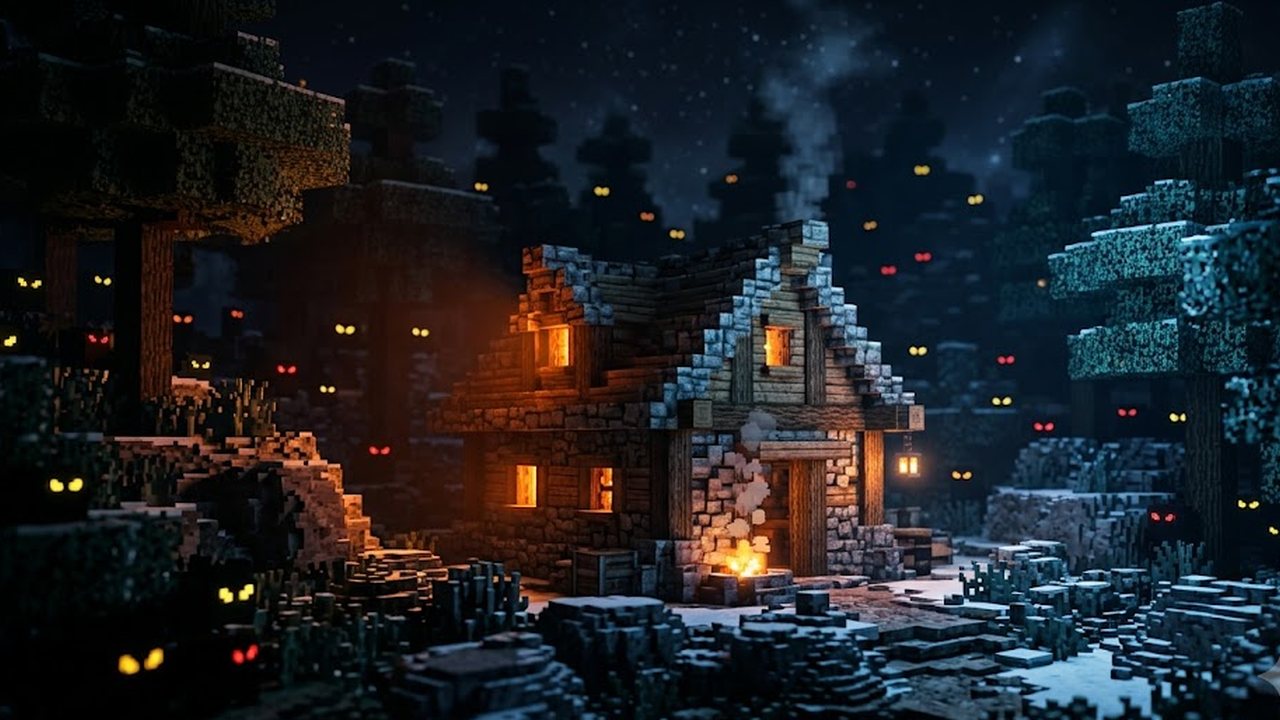
The first night forgives nearly everything except three decisions.
Do not wander. Without a bed, death sends you back to the world spawn. Walking a thousand blocks and dying there means walking a thousand blocks back, with your items on a five-minute clock.
Do not sleep in the open. Hostile mobs spawn where block light is 0 and sky light is 7 or lower — which is the surface at night and any unlit cave. Spawning happens inside a 128-block radius of the player, so "walking away from the monsters" is not a plan.
Do not spend night one mining. Mining after dark is fine; surfacing with a full inventory and no armour is not.
There is a fourth one that only shows up by morning: food. Health regenerates when hunger sits at 18 or above, and at 6 or below you lose the ability to sprint entirely. A hungry character neither heals nor runs, and neither of those switches announces itself on screen. Two cooked steaks in the inventory settle the whole first day.
The minimum kit for morning: crafting table, stone pickaxe, furnace, torches, bed, food. Building projects can wait for day two — the house ideas will still be there.
Why is digging straight down so bad?
Because you cannot look at the block you are standing on. The game breaks it and drops you into whatever occupies the space below, and quite often that is a lava lake or a twenty-block fall. It is the one mistake that kills as reliably in hour 100 as in hour one.
Two replacements work. A diagonal staircase — break the block under you and the one ahead — or a 2×1 shaft where you stand on one column and mine the other, so there is always a floor.
Digging straight up is the same problem inverted: gravel and lava both fall, and both are common ceilings.
How not to lose your base
Press F3. The XYZ readout appears top-left, and those three numbers belong in a text file on day one.
A compass will not save you: it points at the world spawn, which is only your base if you never moved. Landmarks stop working after two cave trips, because underground you lose direction in about thirty seconds.
The second layer is light. A lit base is visible across a night-time landscape, and a torch trail through the forest is both a route marker and a spawn blocker.
How not to lose your stuff
The rule is short: do not carry what you are not prepared to lose. The mechanics give you exactly five minutes of grace.
Dropped items exist for 6000 ticks and then vanish. Lava and fire delete them immediately, with no timer at all. Experience is the harsher half — on death you keep 7 × your level and never more than 100 points, and the rest is gone.
Three habits pay for themselves: keep a spare iron kit in a chest at home, never carry a whole mining trip's haul in one run, and read the death screen before respawning, because it shows the coordinates where you died.
There is a separate category of loss: the stuff carried "just in case". A full stack of building blocks, a second pickaxe, the decorative things from day one. When the drop lands in lava all of it goes with the diamonds, and the difference between travelling light and travelling loaded only becomes visible at that moment.
Plan the walk back before you need it. Going a few hundred blocks deep, place torches on one wall only — on the way out you always know which side is the main tunnel and which is a branch. It costs nothing and buys back exactly the five minutes you are racing.
Pickaxe tiers, and the silent loss
The most annoying failure in the game: the block breaks and nothing drops. Every valuable block has a minimum tool tier, and Minecraft does not warn you.
| Block | Minimum pickaxe | What happens otherwise |
|---|---|---|
| Iron ore | Stone | Block breaks, no ore |
| Diamond ore | Iron | Block breaks, no diamond |
| Obsidian | Diamond | Breaks very slowly and drops nothing |
| Ancient debris | Diamond | Block breaks, nothing drops |
Even with the right tool, obsidian takes 9.4 seconds per block in Java. That is normal, not a bug, and a ten-block portal frame is a minute and a half of standing still. Its blast resistance is 1,200, the highest of any block obtainable in survival, which is why storage rooms end up lined with it rather than just portals.
The related mistake is where the first diamonds go. A diamond sword is tempting, but the pickaxe is what opens obsidian and therefore the entire Nether, while the sword only moves a damage number. The spending order is nearly always pickaxe first.
Ancient debris is a similar trap in reverse: it sits in the Nether and is most common around Y=16, which is exactly the height where new players dig their first tunnel without knowing they are walking past it.
Mobs, and what beginners learn too late
A creeper starts its fuse within 3 blocks, and the fuse is 1.5 seconds (30 ticks). Enough time to back off, not enough to think it over. Explosion power is 3 — one hole in your wall and the chests behind it. Creepers flee cats and ocelots within 6 blocks, which is the real reason to keep a cat indoors.
Endermen aggro on eye contact. A player within 64 blocks who holds their crosshair on the head for 5 ticks starts a fight. A carved pumpkin removes the reaction, and a water bucket ends it — water damages endermen and forces them to teleport.
Phantoms are a counter, not bad luck. Three in-game days without sleep, 72,000 ticks, and they start spawning above you.
To see which mobs you actually know, run the Minecraft knowledge quiz, and for fun, which mob you are.
What usually goes wrong
- "Monsters nearby" with nothing in sight. The check runs 8 blocks horizontally and 5 vertically from the bed head. A zombie behind a wall and a spider on the roof both qualify. Seal the ceiling and light the perimeter.
- You took a bed to the Nether. It explodes with power 5 and sets the area on fire. Respawn anchors are the Nether equivalent; beds stay Overworld tools.
- You sat out every night in a hole and phantoms still came. The counter tracks sleep, not survived nights, and only a bed or a death resets it. Waiting out the dark underground just keeps those 72,000 ticks accumulating.
- The Nether portal came out in the wrong place. Linking uses the 1:8 coordinate conversion and a 128-block search radius, so two portals built close together at home merge into one on the Nether side.
- You went back for the loot and found nothing. Five minutes covers the trip there and back, not re-gearing first. If the drop landed in lava, it was gone the moment it fell.
Where to go next
These mistakes stop repeating after roughly two evenings, and the question shifts from staying alive to what to actually do.
The order the game never states out loud is laid out in the Minecraft walkthrough; if you would rather restart on a better map, there is a set of seeds worth playing, and modded play starts with the mods and modpacks guide.
On a weak machine, fix FPS first — a fair share of "unfair" deaths are frame drops. For PvP servers the Kohi click test is the usual benchmark, and the Minecraft name generator handles the part before you connect. The rest of the game's tools sit on the Minecraft hub.
FAQ
Why should you never dig straight down in Minecraft?
Because you cannot see what is under the block you are breaking, and the game drops you into whatever is there — usually a lava pool or a twenty-block cave. Dig a diagonal staircase instead, or a 2x1 shaft where you stand on one block and mine the other.
How long do items stay on the ground after you die?
Five minutes, or 6000 ticks, and then they despawn. The timer pauses while the chunk is unloaded, but planning around that is a bad habit. Lava and fire destroy dropped items instantly, and experience is worse: you keep 7 x your level, capped at 100 points.
Why did my diamond ore disappear when I mined it?
Wrong pickaxe tier. Diamond ore needs an iron pickaxe or better, obsidian and ancient debris need diamond. Hit diamond ore with a stone pickaxe and the block simply breaks with no drop — the game gives no warning and there is no undo.
Where do phantoms come from and how do I stop them?
They spawn once you have gone three in-game days without sleeping, which is 72,000 ticks on the time-since-last-rest statistic. Sleeping in a bed resets that counter, and so does dying. Short of the spawn_phantoms game rule, there is no other switch in survival.
Do I really need to write down my base coordinates?
Yes, and it is the cheapest insurance in the game. F3 opens the debug screen with exact XYZ; writing them down once is enough. A compass will not help — it points at the world spawn, not at your house.
Sources
- minecraft.wiki: Tutorial — Your first 10 minutes
- minecraft.wiki: Mob spawning (light levels, 128-block radius)
- minecraft.wiki: Item (entity) — 6000 ticks before despawn
- minecraft.wiki: Experience (how much is lost on death)
- minecraft.wiki: Creeper (fuse, trigger range, cats)
- minecraft.wiki: Enderman (eye-contact aggro, water damage)
- minecraft.wiki: Phantom (three days without sleep)
- minecraft.wiki: Bed (sleep conditions, Nether explosion)
- minecraft.wiki: Hunger (regeneration, sprinting, starvation)
- minecraft.wiki: Diamond Ore (iron pickaxe required)
- minecraft.wiki: Obsidian (diamond pickaxe required)
- minecraft.wiki: Ancient Debris (diamond pickaxe, Y=16)